Sign up for our free weekly newsletter here!

Silicon Valley vs. China
When Startups Become Superpowers: The Hidden Politics of the App Economy
By Jack Zhai & Shan Qi
On August 1, 2016, the illusion of Silicon Valley’s inevitable global conquest ended in a boardroom in Beijing. Uber, the highest-valued tech startup in the world, capitulated. After burning through more than $1 billion in a single year trying to capture the Chinese market, Travis Kalanick sold Uber China to his rival, Didi Chuxing.
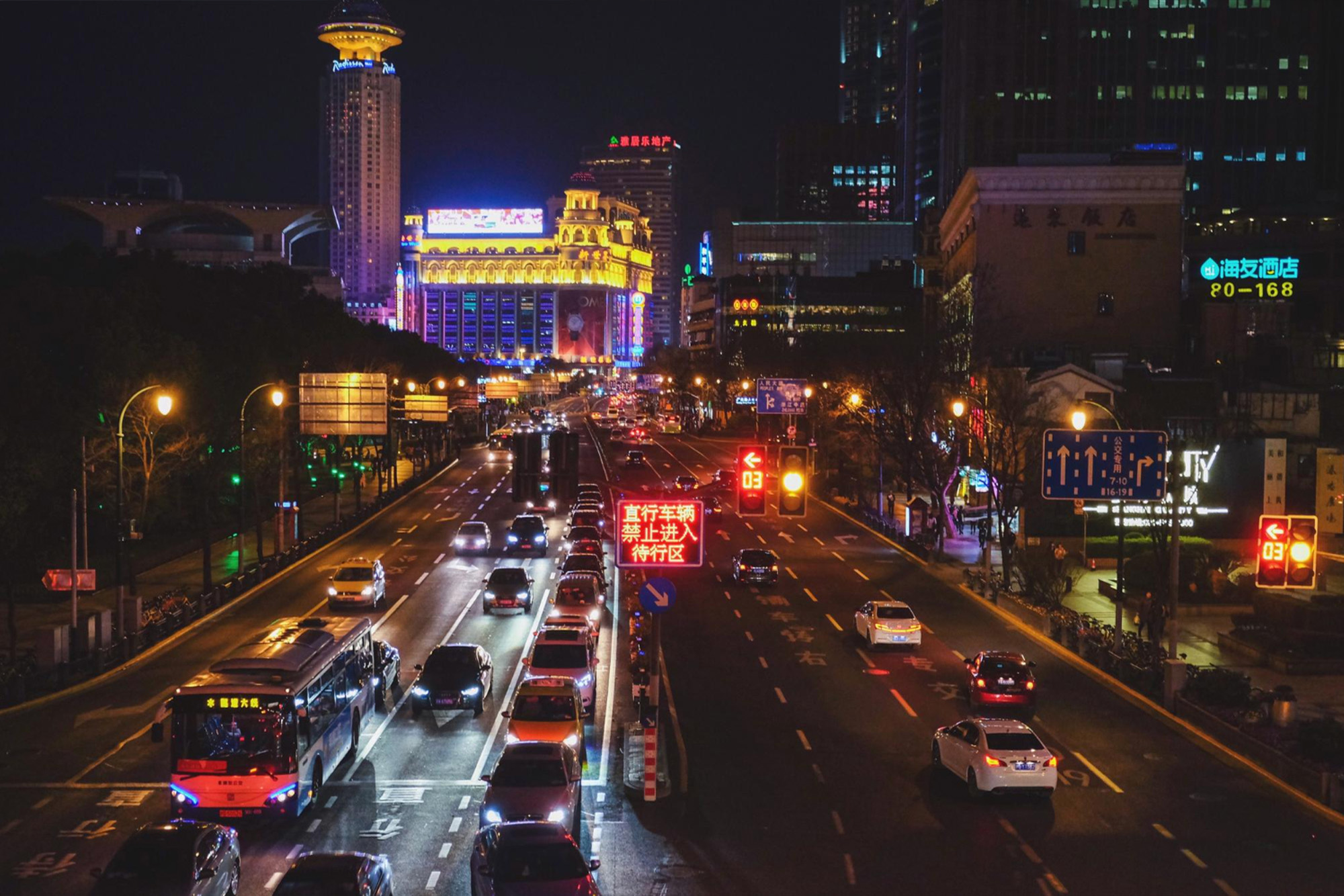
To the financial press, it was a rational exit. To the insiders on the ground—the engineers sleeping in T-shirts and the operations teams fighting street by street—it was a shock. But looking back, that merger wasn’t just a business deal. It was the opening shot of a new geopolitical reality. It marked the moment when tech companies stopped being neutral platforms and started acting like nation-states.
We are no longer just exporting code; we are exporting governance. When a user in São Paulo or Jakarta opens an app, they aren't just hailing a ride. They are stepping into a jurisdiction defined by either the libertarian individualism of California or the hyper-localized, data-driven collectivism of Beijing.
The Ideology of the Interface
Silicon Valley was built on a specific arrogance: the belief that "if you build it, they will come". It’s a philosophy rooted in Peter Thiel’s concept of "Zero to One"—the idea that technology is about creating something entirely new, while globalization is merely copying that thing (going from "1 to N").
In this worldview, the product is king. Steve Jobs famously dismissed market research, claiming people don’t know what they want until you show it to them. When Uber expanded globally, it carried this ethos like a religious doctrine. The app was the app. It didn't accept cash because the "Uber experience" was frictionless and digital. If you lived in a cash-based economy like India or Brazil, the implicit message from Cupertino was simple: catch up.
Chinese companies, forged in the fires of domestic "involution" (neijuan), took the opposite approach. They didn’t have the luxury of cultural imperialism. Lacking the soft power of American brands, companies like Didi and ByteDance treated expansion as a survivalist adaptation.
While Silicon Valley product managers relied on intuition, Chinese teams obsessed over data dashboards. Didi’s product formula was explicit: User Value = New Experience - Old Experience - Switching Costs. Their goal wasn't to "educate" the user; it was to lower the friction of switching to zero. If the market wanted cash payments, they added cash. If the market wanted low-bandwidth versions for cheap Android phones, they built them. They didn't try to change the user; they mutated the product.
The Proxy Wars of the Global South
This clash of ideologies turned the Global South into a battlefield. Latin America, specifically, became the backyard where this proxy war went kinetic.
Consider São Paulo. For Uber, it is one of the top cities in the world by volume. But it was also the stage for a brutal fight for dominance. When Didi couldn't defeat Uber globally, it bought its way into the market by investing in Brazil's local champion, 99 Taxi.
The investment turned 99 into Brazil’s first unicorn, but more importantly, it imported the "China speed" of operations. While Uber relied on its brand and the App Store for distribution, Chinese-backed firms deployed "iron armies" for ground operations—people handing out flyers, recruiting drivers face-to-face, and pushing subsidies that burned cash at rates that would make a traditional CFO weep.
This wasn't just competition; it was a clash of governance models. Uber’s model creates a direct relationship between the individual and the algorithm—a very American, libertarian structure. The Chinese model, exported through investments in companies like 99 and Grab, often integrates more deeply with local infrastructure and legacy systems (like taxis), mirroring the "united front" strategy of coopting existing power structures rather than trying to bulldoze them.
Startups as Sovereigns
The danger for these "superpower" startups is that they eventually become too powerful for their own good. In the digital age, a platform that controls mobility, payments, and information flow begins to look a lot like a government. And actual governments do not like competition.
Didi learned this the hard way. In China, Didi defeated Uber and was celebrated as a national champion. But when it listed on the NYSE in 2021—defying Beijing’s warnings—it was instantly crushed. The app was removed from stores, and its stock collapsed. The message was clear: you can be a commercial giant, but you remain a subject of the state.
In the West, the reckoning is different but equally political. Binance, founded by Chinese-Canadian Changpeng Zhao, became the world’s largest crypto exchange by operating in the "grey" zones of the Global South, bypassing the traditional banking system entirely. It became a de facto central bank for the unbanked in places like Nigeria and Argentina. But to the U.S. Department of Justice, it was a threat to the financial order. Zhao’s eventual guilty plea and the $4 billion fine were the cost of doing business as a borderless entity in a world of borders.
The New Great Game
We are moving past the era of "frictionless" globalization. The app economy is now a fractured map of influence. A product manager in Beijing analyzing user retention in Brazil is no longer just optimizing code; they are engaging in soft diplomacy. A crypto exchange facilitating USDT transfers for Russian freelancers in Dubai is rewriting sanctions policy.
The "White" economy of compliant, public tech giants is shrinking. The "Grey" economy of arbitrage, crypto, and aggressive expansion in the Global South is where the real action is.
For the founders and operators in this game, the lesson is simple. You are not building neutral tools. You are building embassies. And in the battle for the Global South, neutrality is no longer an option.
Digital black markets

Myanmar’s Digital Black Markets: The New Frontier of Global Finance
By Jack Zhai & Shan Qi
On the banks of the Moei River, dividing Thailand from Myanmar, stands a city that technically shouldn’t exist. Shwe Kokko is a $15 billion sprawl of neon-lit casinos, luxury villas, and dormitory blocks rising out of the jungle. It has its own power grid...
Tech & Geopolitics
The Chinese Crypto Diaspora and the Rise of Shadow Capitalism
By Jack Zhai & Shan Qi
In 2017, Beijing thought it had killed the monster...
GLOBAL SOUTH
The Global South’s Playbook for Navigating a U.S.–China Rivalry
By Jack Zhai & Shan Qi
In the corridors of power in Washington...

Data colonialism
The Moral Cost of Cheap Data: How Emerging Markets Power the AI Boom
By Jack Zhai & Shan Qi
In a cramped room in Caracas, the air conditioner...

Jack Zhai & Shan Qi Archives